Last updated: October 5, 2026 · Ondeacha is reader-supported. We may earn a commission when you buy through links on this page. Learn more.
Solar panel guides 9 articles
Start here
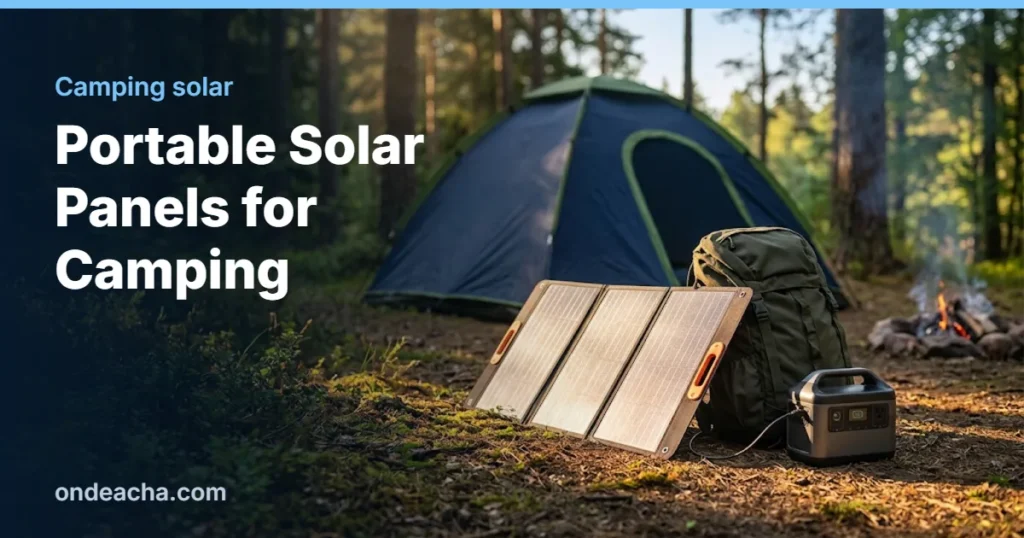
Camping is where a portable solar panel pays for itself fastest: no outlets, long sunny days, and a power station that would otherwise run flat by day two. The right panel depends on how you camp. Car campers can carry a 200W panel without thinking about it. Backpackers count every ounce. This guide sizes the panel for your trip and names the models that fit.
Quick picks
- Car camping with a 1kWh station: Jackery SolarSaga 200W or BougeRV 200W.
- Car camping with an EcoFlow: EcoFlow 160W or 220W Bifacial.
- Light trips and small stations: Jackery SolarSaga 100W Air (about 7 lb).
- Backpacking (phones and headlamps only): a 20–40W USB panel, not a power-station panel.




How much solar does a camping trip need?
Add up what you use per day, then size the panel to put it back. Typical camping loads:
| Device | Energy per day |
|---|---|
| 2 phones, charged once | About 30Wh |
| LED camp lights, 5 hours | About 25Wh |
| 12V cooler / fridge (compressor) | About 250–500Wh |
| CPAP, no humidifier, 8 hours | About 250–400Wh |
| Laptop, 4 hours | About 200Wh |
| Starlink Mini, 8 hours | About 200–320Wh |
Panel watts needed ≈ daily Wh ÷ (sun-hours × 0.75). With 5 good sun-hours, a 100W panel puts back roughly 375Wh a day and a 200W panel about 750Wh.
- Phones, lights, laptop (about 250Wh/day): 100W is enough.
- Add a 12V fridge or CPAP (500–800Wh/day): 200W minimum; 2 × 200W if the forecast is mixed.
- Fridge + CPAP + Starlink (1kWh+/day): 400W of panels and a 1kWh+ station.
The best camping panels, by trip type
Car camping: Jackery SolarSaga 200W
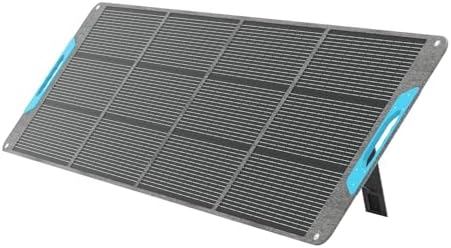
About 14.3 lb, folds to roughly 24 × 24 in, sealed to IP68, with USB-A and USB-C ports for charging a phone straight from the panel. Its 22V output suits nearly any station, and Jackery’s 3+2-year warranty is the longest here.
Budget car camping: BougeRV 200W N-Type
Similar size and weight (13.8 lb) for less money, and it ships with XT60, DC7909, and DC5521 plugs so it works with EcoFlow, Anker, BLUETTI, and older Jackery stations. IP65, so pack it up before a downpour.
EcoFlow owners: EcoFlow 160W
The 160W is the most “camp-friendly” EcoFlow panel: about 12 lb, IP68, and one panel plugs straight into a RIVER 3. Two in series suit a DELTA 3 or DELTA 3 Plus.
Light trips: Jackery SolarSaga 100W Air
About 7.1 lb and roughly 17 × 17 in folded — small enough for a daypack or bike trailer. Enough to keep a 250–500Wh station topped up for phones, lights, and a laptop. Check compatibility: Jackery says it doesn’t work with Explorer 300, 300D, 240D, or 300 v2.
Campsite setup tips
- Find the sun, not the shade. Your tent wants shade; your panel doesn’t. A 10–15 ft extension cable lets you put the panel in the open and keep the station in the shade.
- Re-aim at lunch. Moving the panel two or three times a day can add 25% or more.
- Keep the station cool. Many stations slow charging when hot. Shade it, never the panel.
- Weigh it down. Folding panels catch wind like a sail. Use the kickstand plus a rock or a stake loop.
- Pack it dry. Fold the panel only when it’s dry to protect the fabric hinges.
Common questions
Is 100W enough for camping?
For phones, lights, and a laptop, yes. For a 12V fridge or a CPAP, 100W won’t keep up on its own; go with 200W.
Can I charge my phone directly from the panel?
Jackery’s SolarSaga panels have USB-A and USB-C ports. Most others need to go through a power station.
Which power station should I bring?
See our best power stations for camping.